
Can You Put a Wall Wrap on Block, Brick, or Fresh Paint?
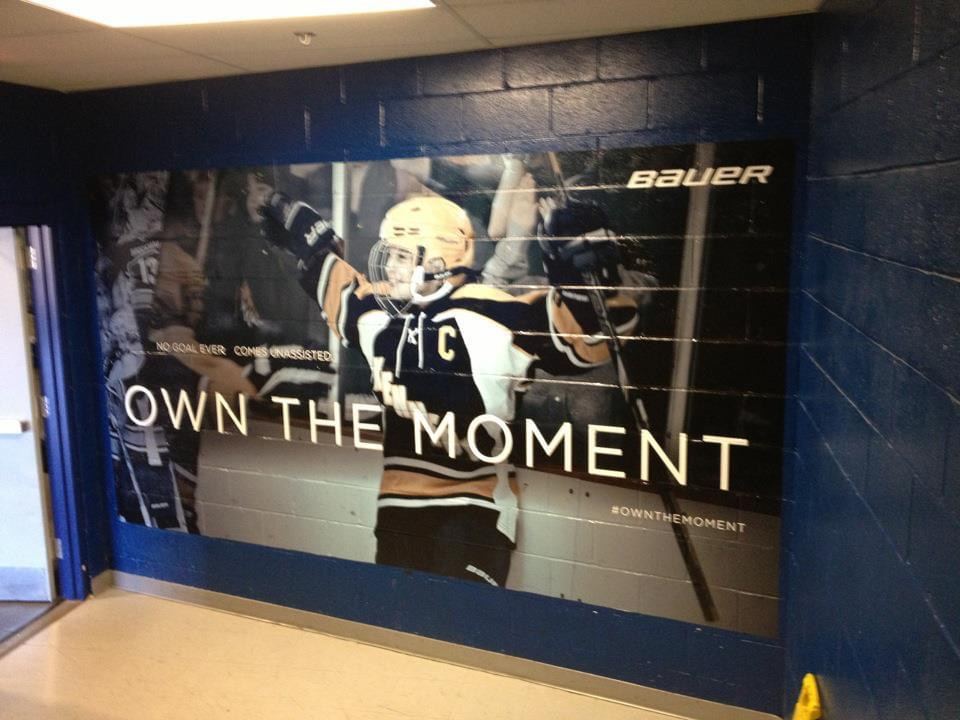
The design gets all the attention, but the wall underneath decides whether a wrap will last. Here's how common surfaces affect wall graphics, and what to check before you order.
Smooth painted drywall
This is the easiest surface to wrap. Most offices, retail spaces, and newer buildings have it. As long as the paint is cured and the wall is clean and sound, it's usually ready.
Painted concrete block
Block is everywhere in schools, gyms, and commercial buildings. It can be wrapped, but the texture and grout lines need a film and install method suited to the surface. This is one of the most common surfaces for locker room and gym graphics.
Brick
Brick is rough and uneven, and it's common in older buildings and converted mill spaces. It often needs a specialty film made for rough surfaces and a different install technique. Whether a brick wall is a good candidate depends on its condition, so it has to be checked in person.
Heavy texture
Heavily textured walls can keep standard film from bonding properly. Depending on the texture, the answer may be a different film, extra prep, or a different spot for the graphic.
Fresh paint
Paint can feel dry long before it's fully cured. A wrap applied too soon may not bond properly. If a wall was recently painted, tell your installer when, so the install can be scheduled after the paint has cured.
Specialty paints
Some paints, including certain low-VOC and scrubbable finishes, can be harder for films to stick to. It's worth knowing what paint is on the wall, or letting your installer test it.
Other things that affect a wall
- Peeling or chalky paint
- Moisture or cold exterior walls
- Outlets, switches, and fixtures
- Wall trim and corners
The takeaway
Most walls can be wrapped with the right film and prep, but the only way to know for sure is to look at the wall. That's why every project should start with a site visit and a surface check before anything is printed.