
Home / Blog / Architectural Film
Refit Without the Renovation: When Architectural Film Makes Sense
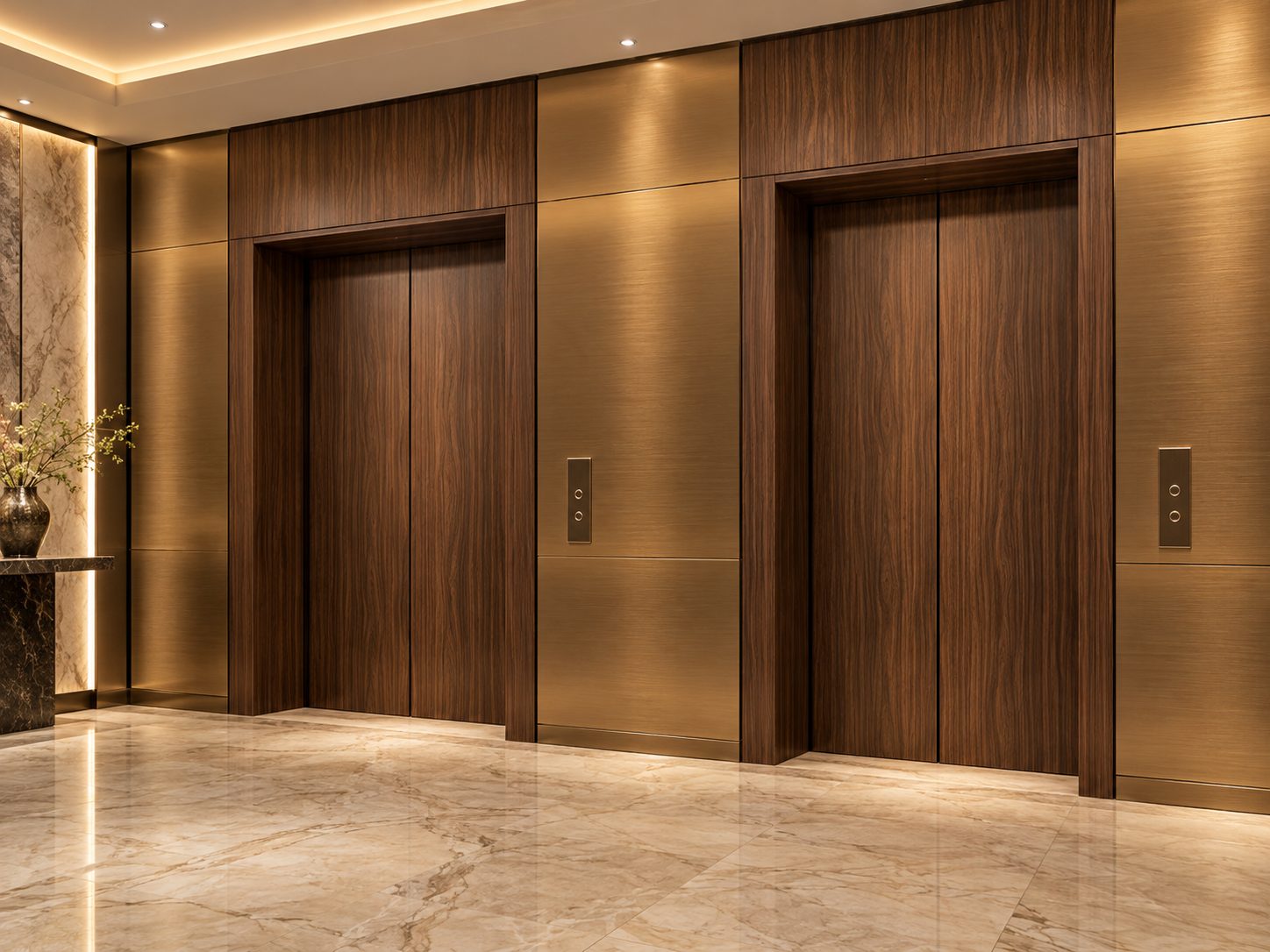
Short answer: if your doors, elevators, desks, or cabinets are structurally sound and just look dated, you probably don't need a full refit. Architectural film puts a new wood, stone, metal, or solid finish right over the existing surface, with no tear-out and usually without closing the space.
More hotels, offices, and property managers are choosing to refresh what they have instead of ripping it out. Here's how to tell when film is the right call and when it isn't.
What a full refit really costs you
Replacing doors, elevator interiors, or millwork brings more than the price of new materials:
- Downtime. Floors, rooms, or lobbies go out of service while the work happens.
- Lead times. New doors, casework, and cab panels can take weeks or months to arrive.
- Demolition. Tear-out means dust, noise, dumpsters, and disposal.
- Disruption. Guests, tenants, patients, and staff work around a job site.
When the structure underneath is fine, most of that is spent replacing something that didn't need to be replaced.
What architectural film is
Architectural film is a thin, self-adhesive finish made to look and feel like real materials: wood grain, marble, concrete, brushed metal, leather, and solid colors. It's made to be cut and stretched around edges and gentle curves, so it covers doors, frames, panels, and casework cleanly.
The result is the same surface with a new finish. Nothing gets torn out.
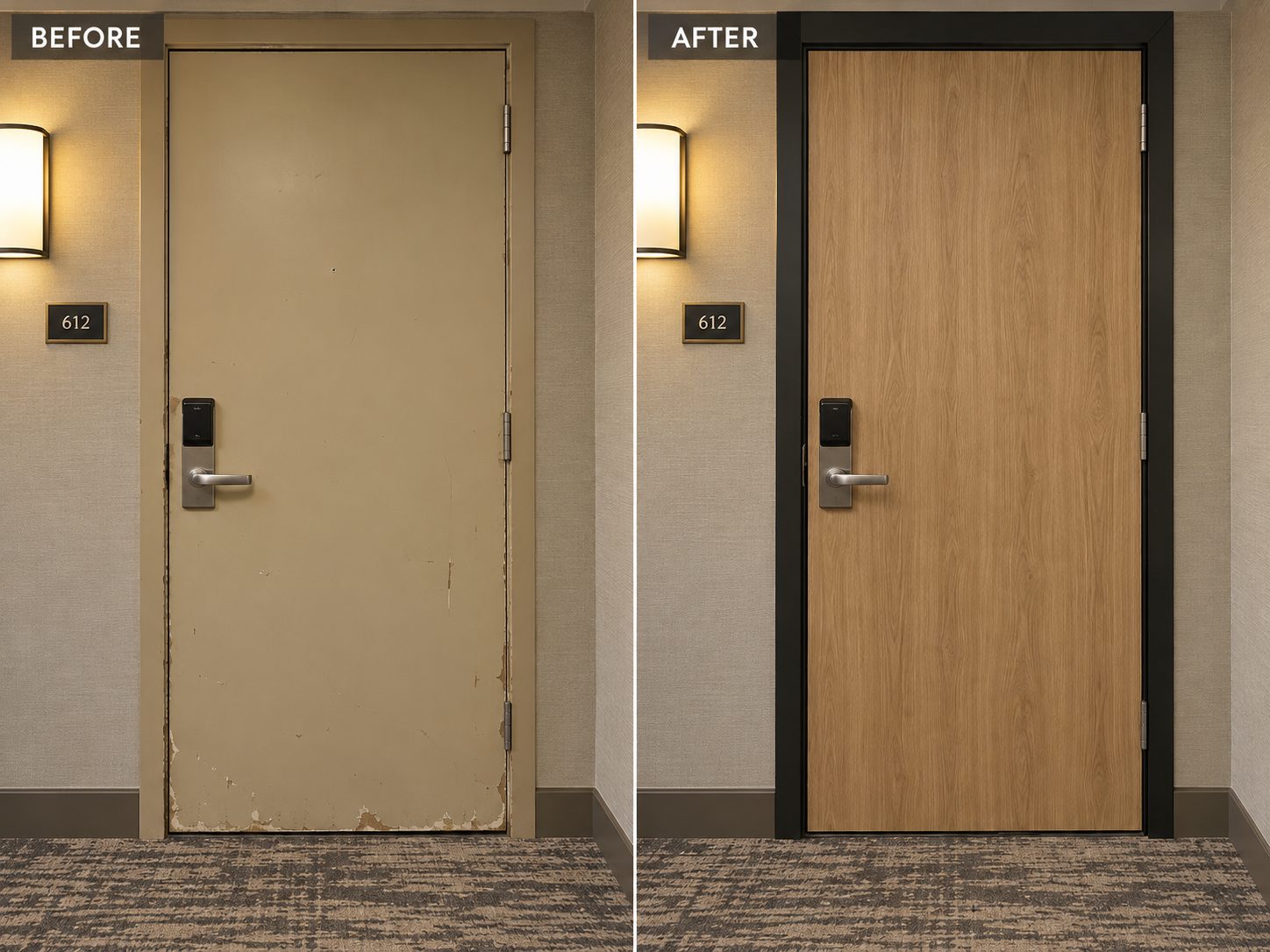
What you can refit with film
- Commercial doors and frames: guest room, corridor, office, and suite doors.
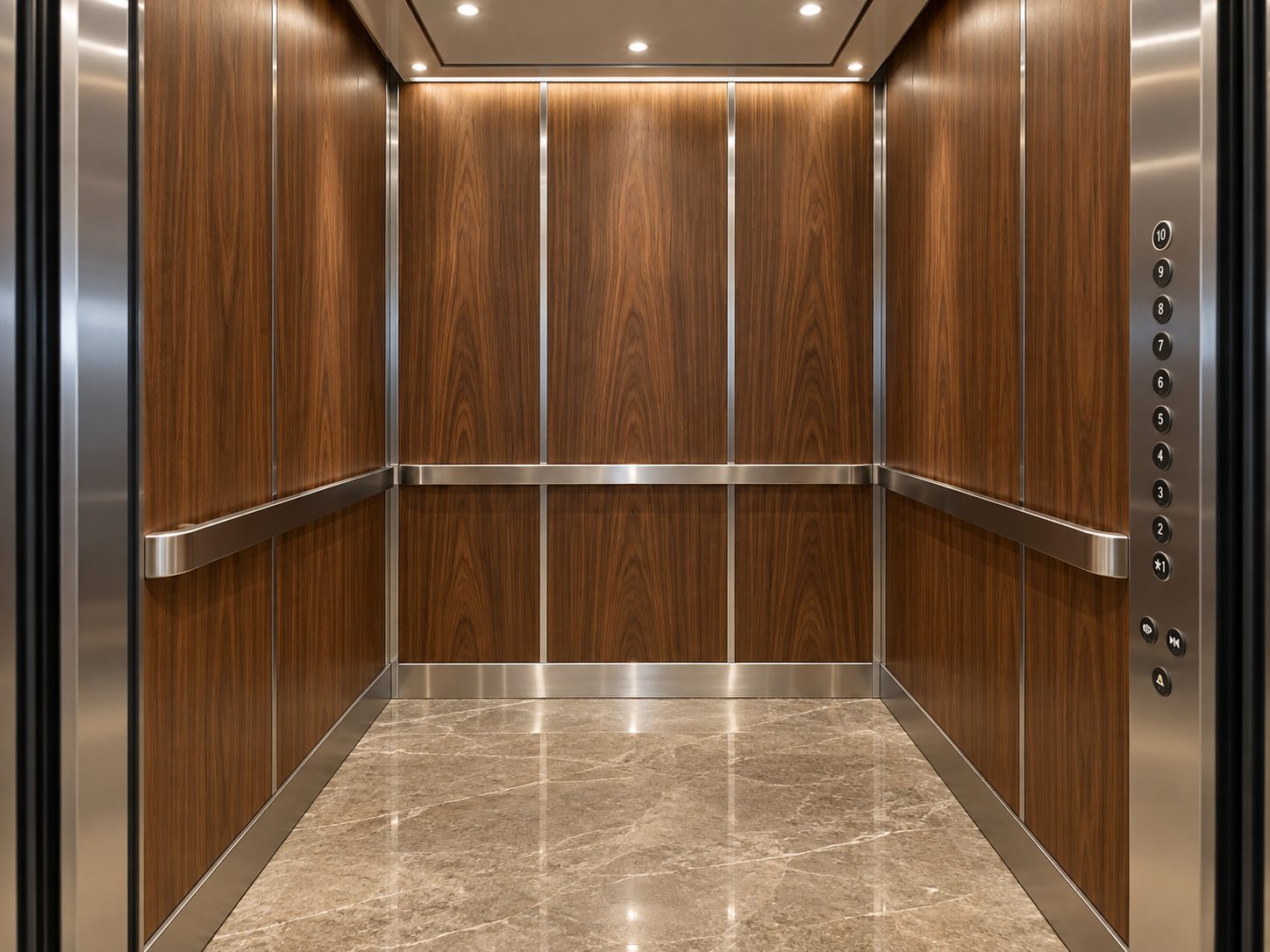
- Elevator cabs and landings: cab walls, panels, trim, and landing doors.
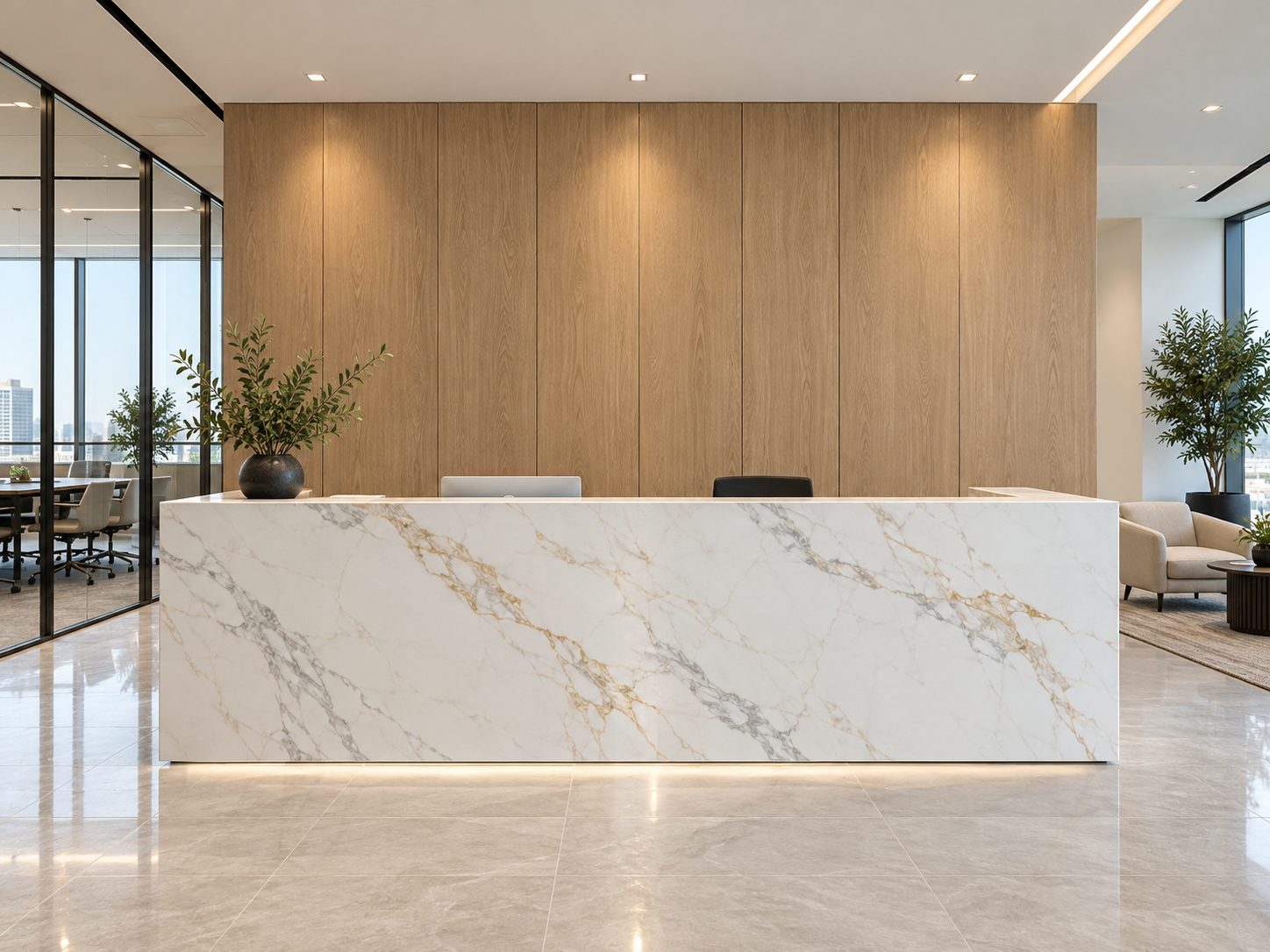
- Reception desks and millwork: front desks, nurse stations, casework, and built-ins.
- Columns and storefront elements: columns, frames, and trim.
- Feature walls and panels: lobby walls, hallway panels, and accent surfaces.
- Kitchens at home: cabinets, islands, and countertops. See kitchen wraps.
Refit with film or replace? A quick check
Film is a good fit when:
- The surface is solid, flat or gently curved, and not water-damaged or delaminating.
- You want a new look without closing floors, rooms, or the lobby.
- You're updating between tenants, ahead of a brand standard, or before a sale or lease-up.
- You'd rather keep good materials out of a dumpster.
Replacement makes more sense when:
- The door, panel, or cabinet is broken, warped, or rotting.
- You're changing the layout, hardware locations, or function, not just the finish.
- The surface is heavily textured or deeply carved and won't take a smooth finish.
Not sure which side you're on? That's what the walkthrough is for.
How a film refit works
- Walkthrough. We look at every surface, check condition, and measure.
- Finish selection. You pick finishes from physical samples, not just a screen.
- Prep. Surfaces are cleaned, repaired where needed, and primed so the film bonds properly.
- Install. Work can be scheduled at night, on weekends, or floor by floor so the building stays open.
- Completion photos. You get photos of the finished work on every job.
Who a film refit works for
- Hotels: guest room doors, corridors, and elevators refreshed without taking rooms offline for long.
- Offices and property managers: lobbies, elevators, and suites updated between tenants.
- Healthcare: doors and nurse stations refinished with cleanable surfaces.
- Designers and architects: an install partner for specified finishes on renovation projects.
- Homeowners: kitchen cabinets and countertops updated in place.
Common questions
Can architectural film go over metal doors and elevator panels?
Yes. Metal, wood, laminate, and painted surfaces can all take film when they're sound and properly prepped.
Do we have to close the space during the install?
Usually not. Installs can run at night, on weekends, or one area at a time so the rest of the building stays in use.
Is it real wood or stone?
No. It's a printed and textured film made to look like those materials, which is why it can go on in place without heavy materials or tear-out.
Can film be repaired if it gets damaged?
Damaged sections can be cut out and replaced with matching film instead of redoing the whole surface.
Do you work outside Boston?
Yes. We install across New England. See our service areas.
Next step
Thinking about a refit? Send us photos of the doors, elevators, desks, or cabinets and a rough count, and we'll set up a walkthrough with samples.
→ Get a quote · See architectural film, kitchen wraps, and wall coverings.