
Home / Blog / Schools & Athletics
Record and Championship Walls: How to Plan One You Can Update
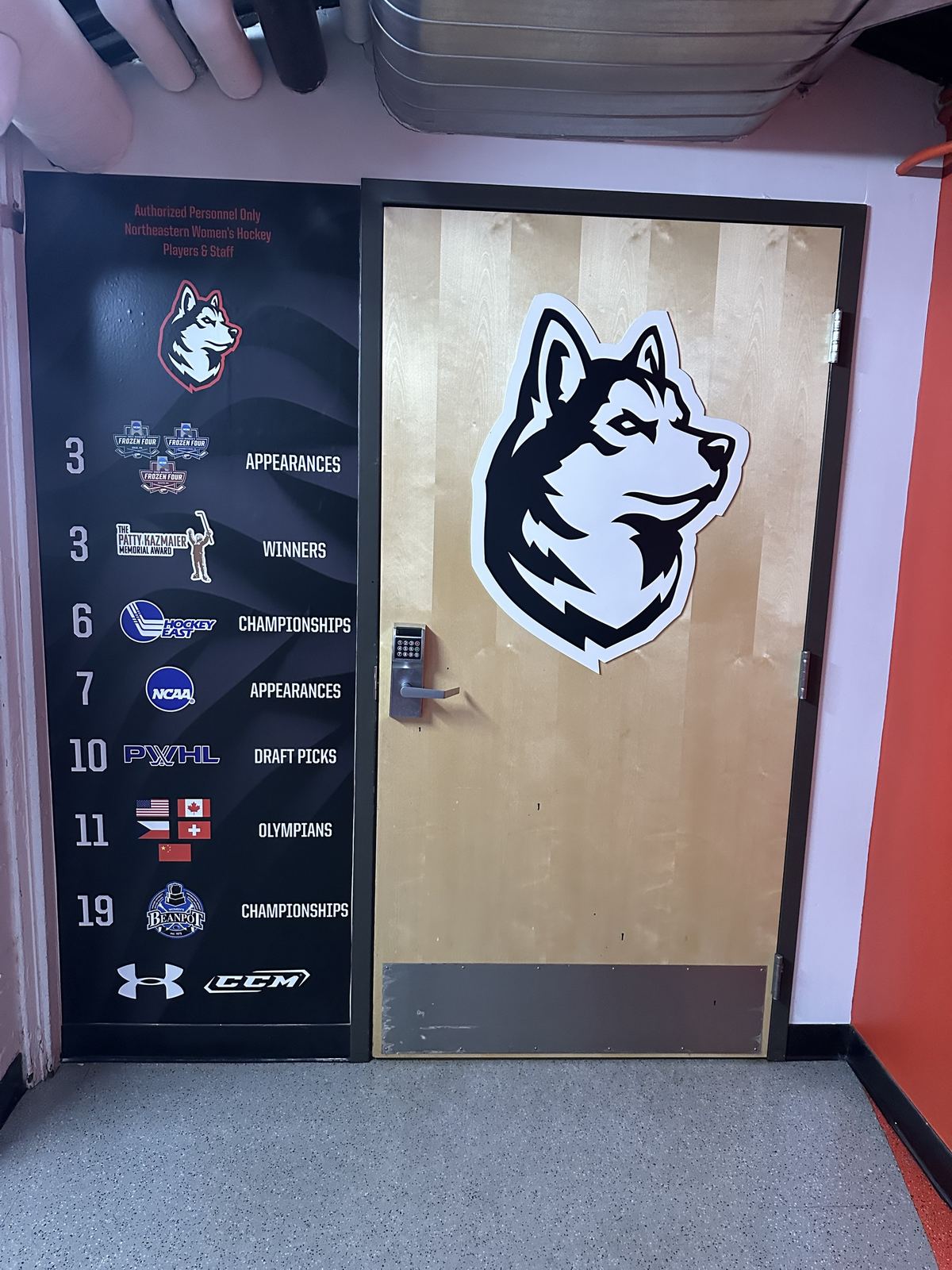
A record wall is one of the few wall graphics that's supposed to change. Records fall, teams win titles, and new names need a place to go. If the wall isn't planned for that, the first update turns into a full reprint.
Here's how to lay one out so it can grow with the program.
Decide what the wall tracks
Start with a list, not a design. Most record and championship walls cover some mix of:
- Championships: league, sectional, state, and tournament titles by year
- Individual records: event or stat, name, mark, and year
- Team records: best seasons, win streaks, program milestones
- Honors: all-conference, all-state, captains, coaches' milestones
- Alumni who went on: college, pro, or national team players
Pick the categories that matter to your program and leave the rest off. A wall that tries to track everything gets crowded fast.
Split the wall into two layers
The simplest way to plan for updates is to think of the wall in two parts:
- The base: background, logo, mascot, headers, and colors. This part shouldn't need to change.
- The content: names, years, marks, and titles. This is the part that will.
When the content sits in its own defined areas instead of being woven into the background art, new entries can be added later without touching the rest of the wall.
Leave room on purpose
An updatable wall needs open space built into the layout from day one.
- Championship years: leave empty rows or slots after the most recent title.
- Record boards: give each event or stat its own line, so a new mark replaces only that line.
- Running counts: if the wall shows totals, plan for those numbers to change.
Empty slots shouldn't look unfinished. A good layout makes the open space read as part of the design, not a gap.
Keep the format consistent
Updates blend in when every entry follows the same pattern. Settle these before the first proof:
- Fonts and sizes for names, years, and marks
- Name format: full first names, initials, or last names only
- Units and abbreviations: how times, distances, and stats are written
- Order: newest first, oldest first, or grouped by sport
Write it down and keep it with the artwork files. Whoever runs the program in a few years will thank you.
Get the data right before it prints
A record wall is only as good as its information. Spelling, years, and marks should be checked by someone who knows the program history: a coach, an athletic director, or a booster who keeps the records.
Every wall gets a proof sized to the wall before anything prints. That's the time to catch a misspelled name, not after install.
Check the wall and the location
Record walls usually go in gyms, hallways, lobbies, and outside locker rooms. Most of those are painted concrete block, which can be wrapped with the right film and install method. Fresh paint needs time to fully cure first.
Think about traffic too. A wall next to a busy doorway or bleachers takes more contact than one in a quiet lobby. The site visit covers the surface, the space, and how people move past it.
Plan who handles updates
Decide up front how updates will happen. A good rhythm is to collect new records and titles through the season and update once a year, instead of chasing every change as it happens.
Because the same team designs, prints, and installs the wall, updates are built to match what's already there. When it's time to add a new year, a new name, or a new title, the new piece follows the same layout and format.
Start with one wall
You don't need a full hall of fame on day one. Many programs start with a single championship wall and add a record board or honors wall later, using the same base design so it all ties together.