
AR Wall Graphics: How a Printed Wall Comes to Life
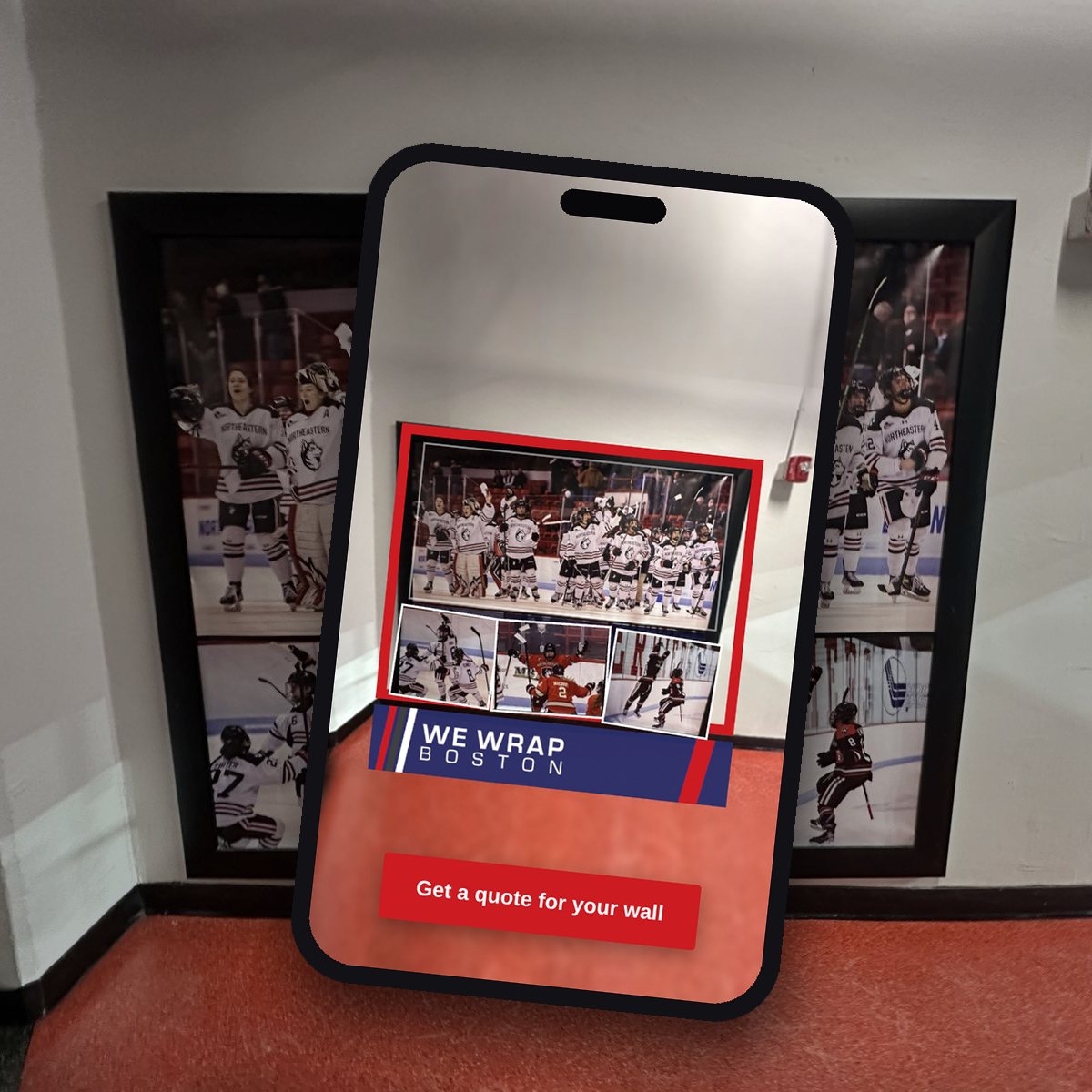
A printed wall graphic is a still image. An AR wall is the same printed wall, but when someone points their phone at it, the artwork moves. A mascot jumps out. A team photo lifts off the wall. A car drives toward the viewer.
Here's how it works, and where it makes sense.
How an AR wall works
- The wall is printed and installed like any other wall graphic.
- A QR code on or next to the wall opens the experience in the phone's web browser.
- The phone recognizes the artwork. The printed wall is the trigger, so the animation lines up with the graphic.
- The animation plays on the wall, and can end with a button to shop, book, or get an offer.
There's no app to download and nothing to sign up for. It runs on current iPhones (in Safari) and Android phones.
What it can do
- Mascots come alive: the mascot on the gym wall roars and leaps off it
- Photos lift off: team photos and collages pop toward the viewer
- Products come out: a car, a jacket, or a ball breaks through the wall
- Video on the wall: highlights, a promo, or a message play right on the graphic
- Tap to act: a button sends people to your store, menu, or quote form
Where AR walls fit
Schools and teams. Locker rooms, gyms, and hallways where students and fans will scan and share. School walls don't collect personal information.
Retail and restaurants. A storefront or interior wall that gives walk-bys a reason to stop.
Dealerships. A showroom wall where the car drives out to meet the customer.
Offices and lobbies. A brand wall that tells your story when visitors scan.
Design the wall and the animation together
The best AR walls are planned as one piece. The printed artwork has to look finished on its own, because most people walking by won't scan it. The animation then builds from that exact artwork, so what pops out matches what's on the wall.
That's why the trigger is always the finished graphic as it will appear on the wall, and why it gets tested on a phone before anything prints.
Placement matters
An AR wall needs a spot where people can stand back and point a phone at it. Lighting and glare affect how well the phone recognizes the artwork, so the site visit checks both. Outdoor walls can work with the right placement and a matte film.
You can measure it
Unlike a regular wall, an AR wall can report how many people scanned it, how long they watched, and how many tapped through. The animation can also be swapped for a seasonal promo without reprinting the wall.